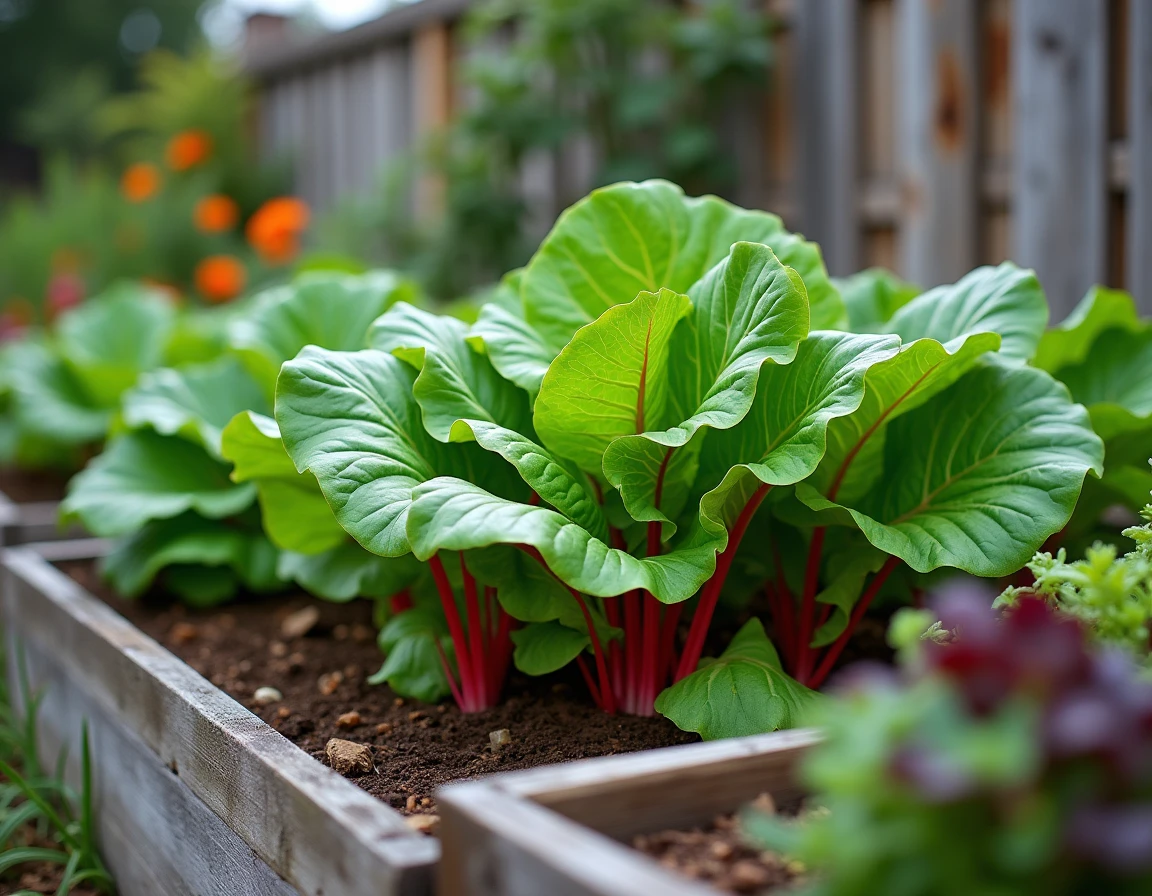
On a a vegetable bed where Swiss chard already occupies a good volume, one quickly encounters a concrete problem: the large leaves cast shade on neighboring rows, and the roots draw water from the surface. Before planting anything next to it, one must think in terms of height, cycle, and root complementarity.
The association of Swiss chard in the vegetable garden is not just a list of “good neighbors”: it is a balancing act between light, water, and harvest timing.
Cast Shade and Row Placement: The Trap Ignored by Cultivation Guides
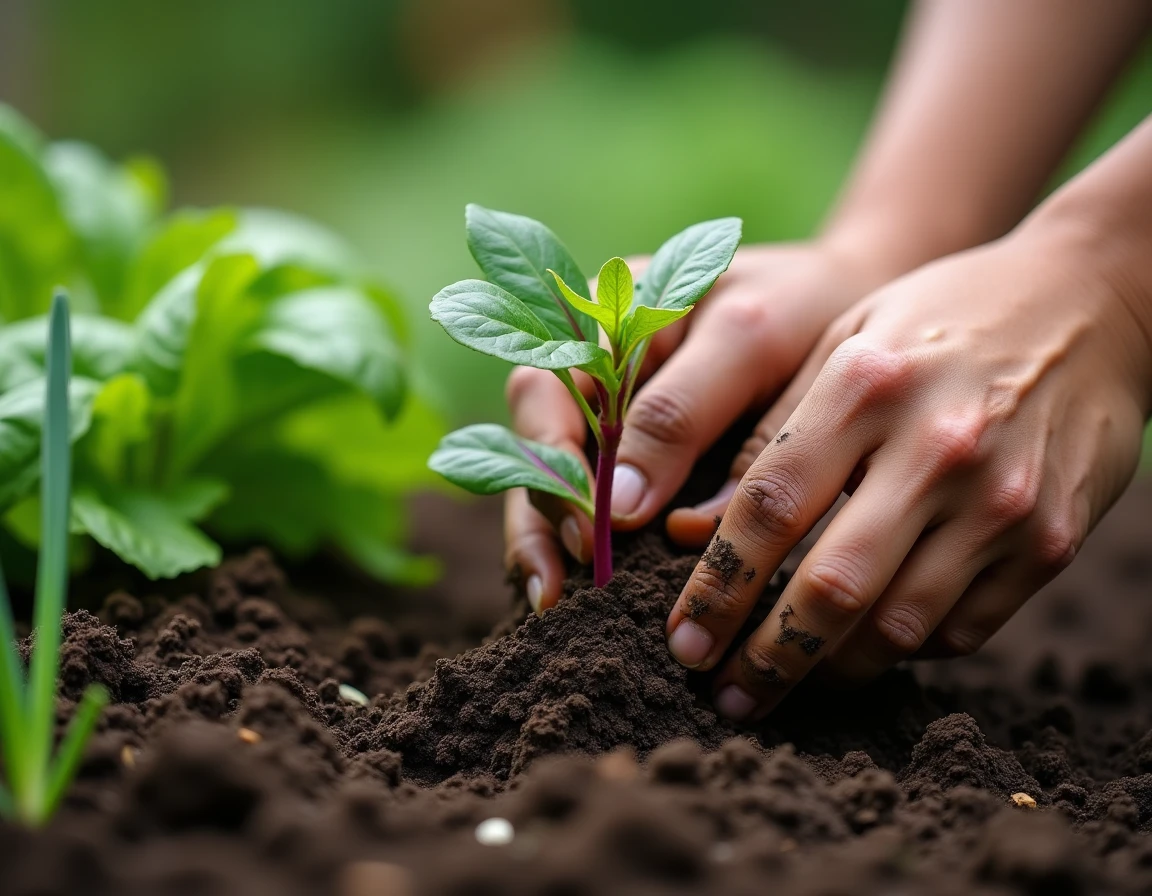
Swiss chard tolerates partial shade, but it produces significantly better when it receives direct sunlight for a good part of the day. The real problem is what is placed next to it.
If pole beans or tomatoes are placed to the south of the bed, the shade cast by the tall crops reduces leaf production. The Swiss chard ends up underperforming, the stalks become thinner, and the harvest decreases. The ground rule: crops that exceed the height of Swiss chard should always be placed to the north or in the background of the row.
Conversely, the Swiss chard itself casts shade on the low vegetables placed at its base. This is an asset if utilized, a drawback if ignored. It can be used to shelter lettuce or spinach in summer when the sun is strong. The concrete result of this type of Swiss chard association in the vegetable garden depends greatly on the orientation of the bed and the season.
Swiss Chard and Short-Cycle Crops: Radishes, Lettuce, Spinach as Intercrops
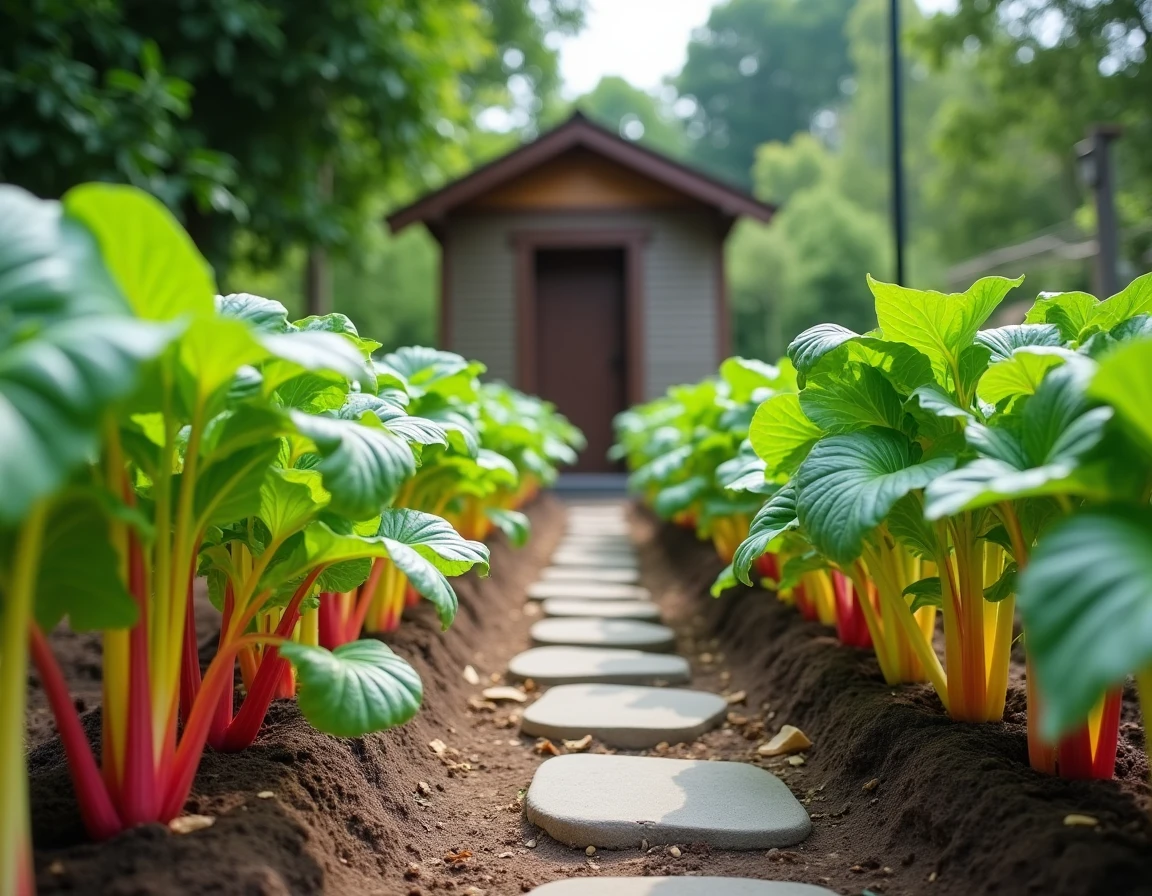
Swiss chard takes time to occupy its entire space. Several weeks pass between sowing and the moment the foliage covers the bed. This downtime can be exploited.
Sowing radishes or lettuce between the rows of Swiss chard at the beginning of the season allows for harvesting before the Swiss chard takes up all the space. Radishes emerge in three to four weeks, and cut lettuce a bit longer. By the time the Swiss chard starts to spread, the intercrops have already been harvested.
Spinach also works in this logic, especially in spring. Its cycle is short enough not to compete with the Swiss chard once it is established. However, in mid-summer, spinach bolts too quickly: it is better to replace them with heat-tolerant lettuce.
Practical Organization on the Bed
Swiss chard is sown in rows with a spacing of about 30 to 40 cm. Between two rows, a row of radishes or lettuce is slipped in. The idea is not to fill every inch but to occupy the bare soil during the slow growth phase of the Swiss chard.
- Radishes: sown at the same time as the Swiss chard, harvested well before the foliage covers them
- Cut lettuce: planted at the edge of the row, they benefit from light shade in early summer
- Spring spinach: good complementarity as long as the temperature remains moderate
This type of intercrop also prevents leaving the soil bare, which limits evaporation and the emergence of weeds.
Alliums Near Swiss Chard: A Concrete Health Benefit
Leafy vegetables are often associated with alliums (garlic, onion, leek) for a simple reason: the dominant pests are not the same. Swiss chard is particularly sensitive to slugs and certain foliar diseases. Alliums, on the other hand, attract different pests (onion fly, leek moth).
By mixing these two families in the same bed or in adjacent rows, one avoids concentrating a single type of pest in one place. Field reports on this point are generally positive, although results vary depending on the climate and local slug pressure.
Garlic, in particular, is easy to intersperse. Planted in the fall, it is already well established when Swiss chard is sown in the spring. It frees up space in summer, when the Swiss chard needs more room.
Harvesting Leaf by Leaf: The Method That Changes Swiss Chard Productivity
Swiss chard is associated with other vegetables to maximize space, but the way of harvesting affects yield as much as the choice of neighbors. Cutting the entire plant at the base means losing the ability to regrow. Swiss chard produces continuously if harvested leaf by leaf, starting with the largest outer leaves.
This method has a direct advantage for associations: the plant remains in place longer, and its foliage continues to protect the soil around it. The low crops installed nearby benefit from this covering effect throughout the season.
When and How to Harvest
Wait until the leaf reaches a sufficient size, then cut the stalk at the base with a clean knife. The heart of the plant is never touched. Two to three harvests per week maintain a regular production without exhausting the plant.
- Always start with the outermost and most developed leaves
- Never harvest more than one-third of the foliage at once
- Keep at least four to five central leaves to ensure regrowth
With this approach, a single row of Swiss chard provides harvests from late spring until the first frosts. The space freed up by short-cycle crops at the beginning of the season can even be reused for a late sowing of mâche or arugula, which will take over in the fall.
Swiss chard remains one of the most versatile leafy vegetables in the garden. Its true potential is revealed when treated as a permanent crop in the bed rather than as a one-off vegetable, and when neighbors are chosen to occupy the space it leaves free, not to compete with it.