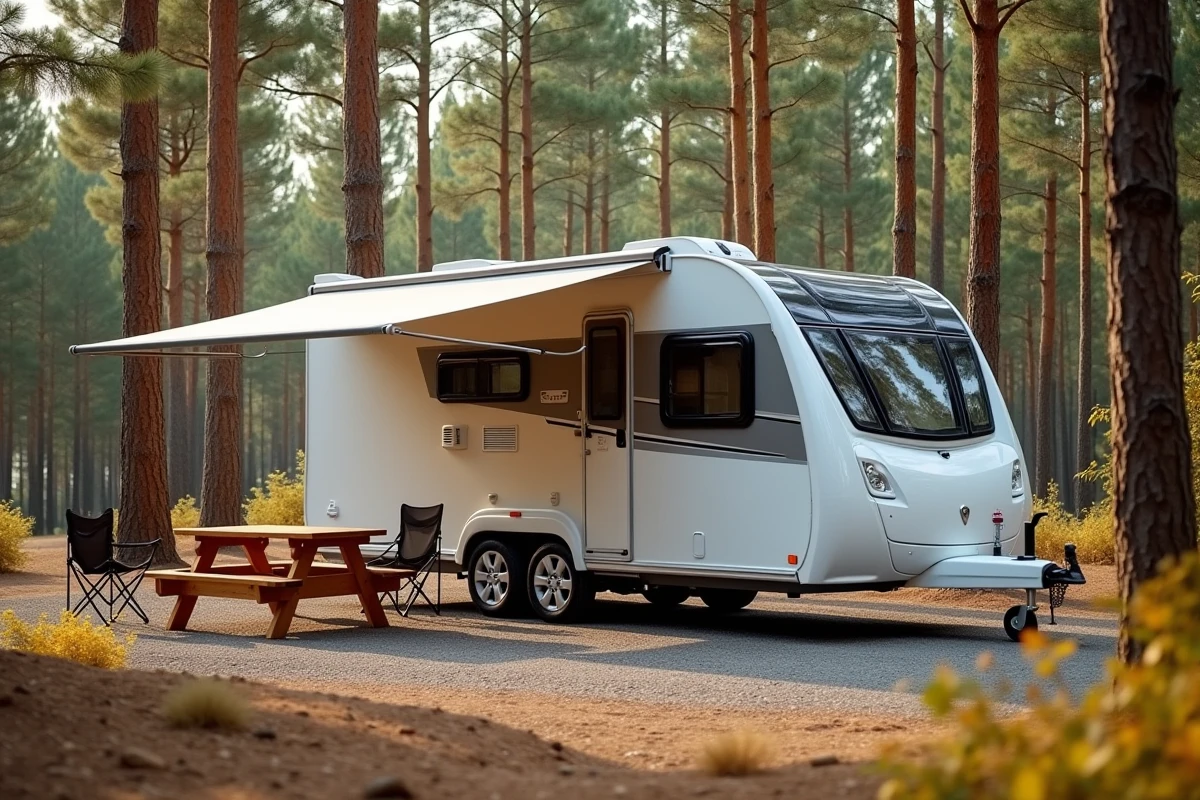
When towing with a city car or a compact SUV, every kilo counts. The two-person caravan is not chosen from a catalog: it is selected based on the vehicle, the intended terrain, and the desired level of autonomy. Today’s compact models have little in common with the spartan trailers of ten years ago. Enhanced insulation, lithium energy packs, integrated heating: the small caravan now competes with larger models.
Electric autonomy of compact caravans: the criterion that comparisons overlook
Most buying guides list the refrigerator, heating, and water heater. They overlook the aspect that truly changes daily use: energy autonomy without mains connection.
Since 2023-2024, several manufacturers (Eriba/Hymer, Knaus, Adria, Bürstner) offer energy packs specifically designed for two-person compact caravans. These packs combine lithium batteries, solar panels, and booster chargers. The goal: to last several days in complete autonomy, without electrical connection at a campsite.
There is a comparison of comfortable two-person caravans that details the basic equipment, but the energy pack is often treated as a secondary option. On the ground, it is the first item to check if planning stops in natural areas or on farm campsites.
In practical terms, a good capacity lithium battery paired with a solar panel can power LED lighting, a 12V compressor refrigerator, and the water pump for two to three nights without a hookup. With a standard lead battery, you generally get only one night under the same conditions. The extra cost of the lithium pack pays off from the first season of camping.
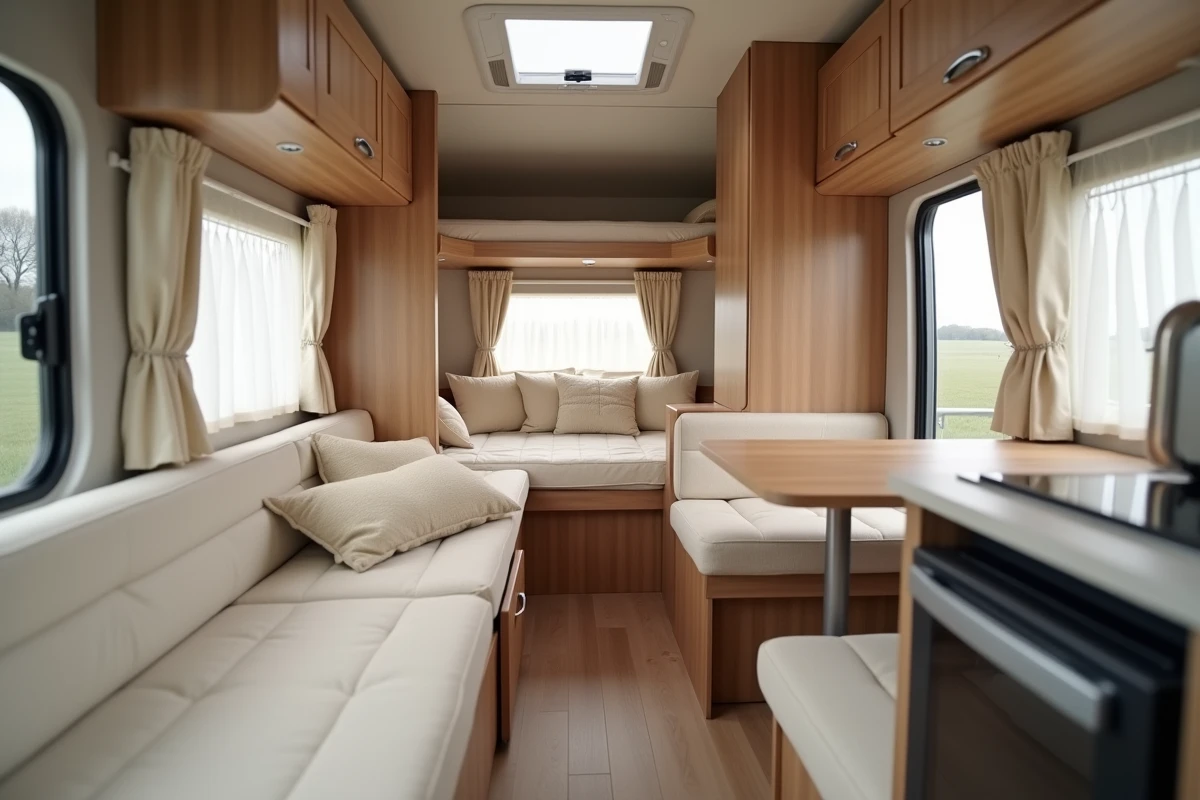
Four-season insulation on a two-person caravan: what the Winter pack truly changes
Small caravans are still often associated with summer use. However, manufacturers have caught up. The Winter pack, long reserved for family models over five meters, is now found on caravans less than four meters in exterior length.
Enhanced insulation (floor, walls, roof) combined with a Truma or Alde heating system transforms the interior. One goes from a caravan usable from April to September to a vehicle viable in cold conditions, including for stays at altitude or weekends in November.
What to check before buying
- The thickness of the floor insulation: this is the weak point of entry-level models, and it is where the cold primarily seeps in
- The type of heating (fan, convector, mixed air/water) and its nominal power suitable for the reduced interior volume
- The presence of double glazing or reinforced insulation windows, which limits nighttime condensation in such a compact space
- The compatibility of the Winter pack with the all-electric mode (some caravans like the Caravelair Alba 350 operate without gas, simplifying maintenance but requiring sufficient electric heating)
Feedback varies on this point: some users find the fan heating noisy in such a small volume, while others adapt without issue. Ideally, one should spend a trial night before purchase, when the dealer allows it.
Actual weight and towing vehicle: the calculation that no one gets right
The GTW announced by the manufacturer is a maximum weight when empty, without water, belongings, or accessories. In real conditions, one easily adds a hundred kilos with the auxiliary battery, gas bottle (if applicable), awning, dishes, and clothing.
The question of the towing vehicle is directly related. With an electric vehicle, the towing capacity is often lower than that of an equivalent thermal model. This is a factor that increasingly directs buyers towards two-person compact caravans, but two data points must be crossed: the actual loaded weight of the caravan and the approved towing capacity of the vehicle.
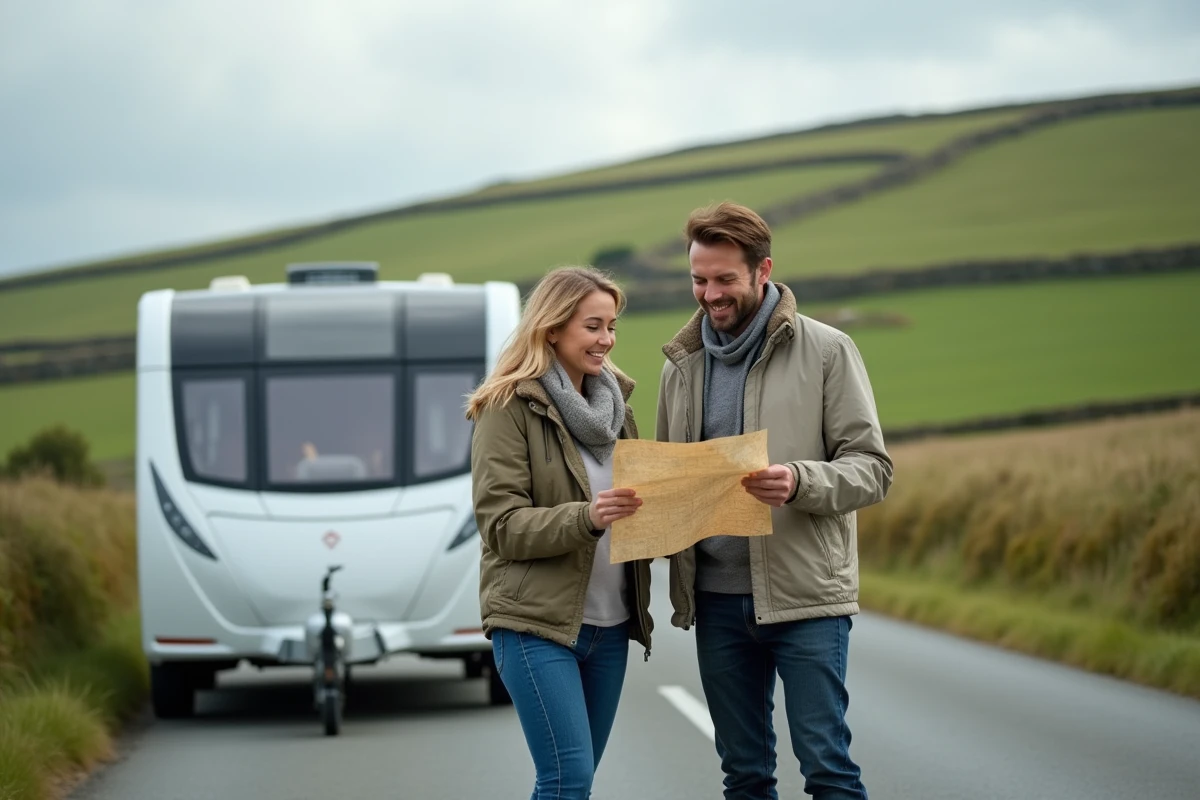
Standard B license and weight threshold
With a standard B license, the car + caravan combination must not exceed a certain regulatory threshold. Compact two-person caravans generally fall below this limit, but it is the actual load (and not the catalog weight) that counts during inspections.
It is recommended to weigh the entire loaded setup on a weighbridge before the first trip. This is free in most equipped waste disposal sites and avoids an unpleasant surprise during a roadside check.
All-electric or gas: which power mode for a compact caravan
The Caravelair Alba 350 exemplifies the trend: induction hob, 12V compressor refrigerator, auxiliary battery, no gas bottle. This all-electric operation simplifies maintenance and eliminates the constraint of refueling with LPG.
In return, an all-electric caravan is entirely dependent on its battery reserve. Without a solar panel or access to a charging station, autonomy drops quickly. The model is perfectly suited for stays in equipped campsites but requires more preparation for wild camping.
Hybrid models (gas for heating and cooking, electric for everything else) retain the advantage of versatility. On a multi-week trip, the ability to switch to gas when the battery weakens remains a valuable safety net.
The market for compact two-person caravans is now clearly segmented between these two philosophies. The choice depends on the type of stay: connected camping or autonomy in the wild. Asking this question before looking at prices or interior layouts avoids most post-purchase disappointments.