On paper, some models promise the moon. In practice, they stall at the first obstacle. This is the reality of many gas-powered augers: roaring engines that are powerless as soon as the ground hardens, big brands that attract more with appearance than performance. When it comes to digging beyond 80 centimeters or tackling clay soil, disappointment easily lurks.
The difference is not in the accessory catalog, nor even in the price. It lies in the very design of the machine: balance, robustness, precision. Engine displacement, choice of bits, clutch—these dictate the quality of work, long-term reliability, and ease of use. A powerful engine is not enough; the mechanics must keep up, and the handling must inspire confidence.
What is a gas-powered auger used for in the garden? An overview of uses and benefits
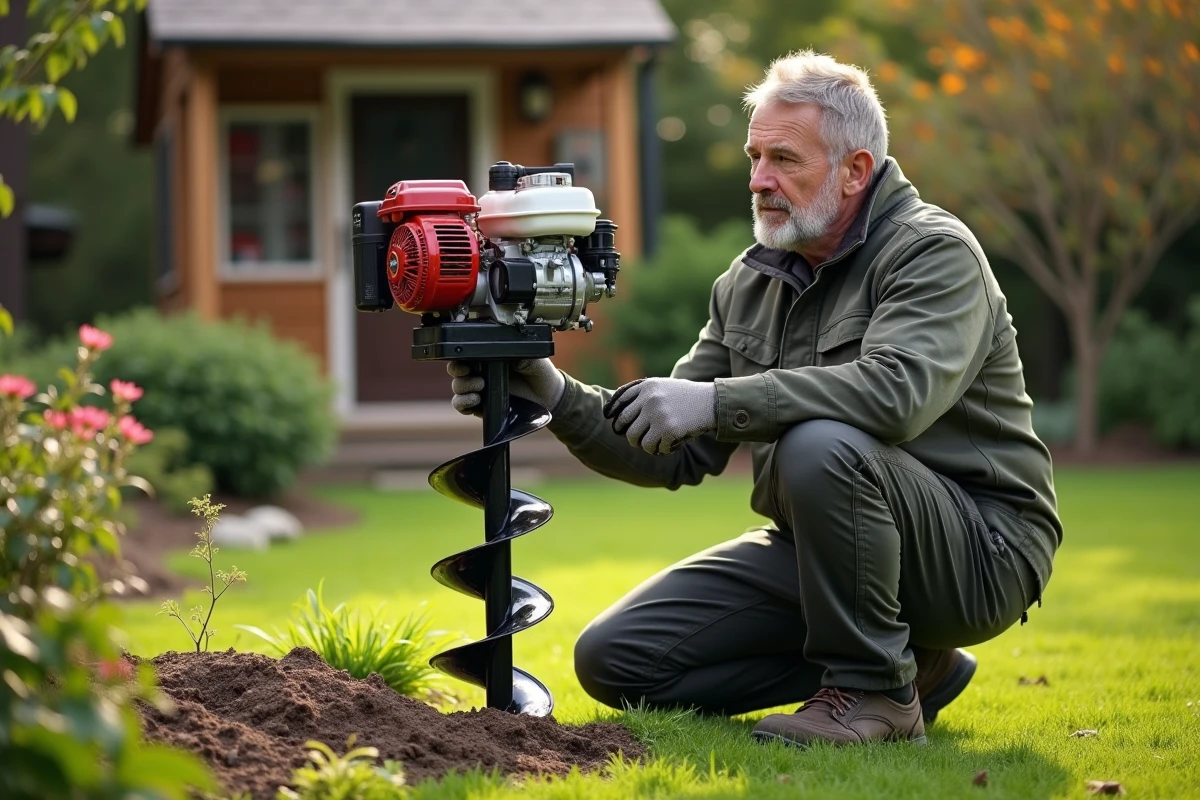
The gas-powered auger proves to be a valuable ally when it comes to digging quickly and precisely in difficult soil. With its gasoline engine, it far outperforms electric or manual versions, whether it’s about tackling compact, clayey, or rocky soil. Planting a tree, securing a fence, preparing a lightweight foundation, or drilling for drainage: the machine is up to the task, even when the ground resists.
But its uses go far beyond simple gardening. In landscaping, it facilitates the installation of structures and soil probing. Where a pickaxe exhausts, the auger creates a clean hole, adjusted to the right diameter, in record time. Construction professionals also use it for occasional interventions on challenging terrains.
Selecting the model is not random: it will depend on the type of soil, the depth, and the diameter to be achieved. Adapting the bit, regularly maintaining the machine, cleaning, air filter, sharpening, helps prolong its lifespan and avoid unpleasant surprises. Use requires wearing PPE: gloves, goggles, safety shoes, hearing protection. For those with only occasional needs, renting offers an effective and economical alternative.
To compare models and choose without a hitch, Tariere-thermique.com offers detailed reviews and updated tests, helping to pinpoint the best gas-powered auger for every use, from gardening to professional landscaping.
Gas, electric, or manual: how to navigate the different types of augers?
In the jungle of augers, there are three main categories: gas-powered, electric, and manual. Each type corresponds to a specific use, depending on the nature of the soil, frequency of use, or desired depth. For heavy-duty work and tough soils, the gas-powered auger stands unrivaled. Its gasoline engine, whether two-stroke or four-stroke, delivers the expected power to penetrate clay, limestone, or rocks, while quickly drilling large-diameter holes. Landscaping and construction professionals rely on it for its reliability and endurance.
The electric auger plays in the intermediate court. Powered by mains or battery, it is lighter, quieter, and produces no harmful emissions. Ideal for small gardening tasks, installing stakes, or planting in soft soil. But as soon as the ground hardens or the diameter increases, its limitations become apparent. Battery models are appealing for their mobility but require careful planning of intervention duration due to moderate battery life.
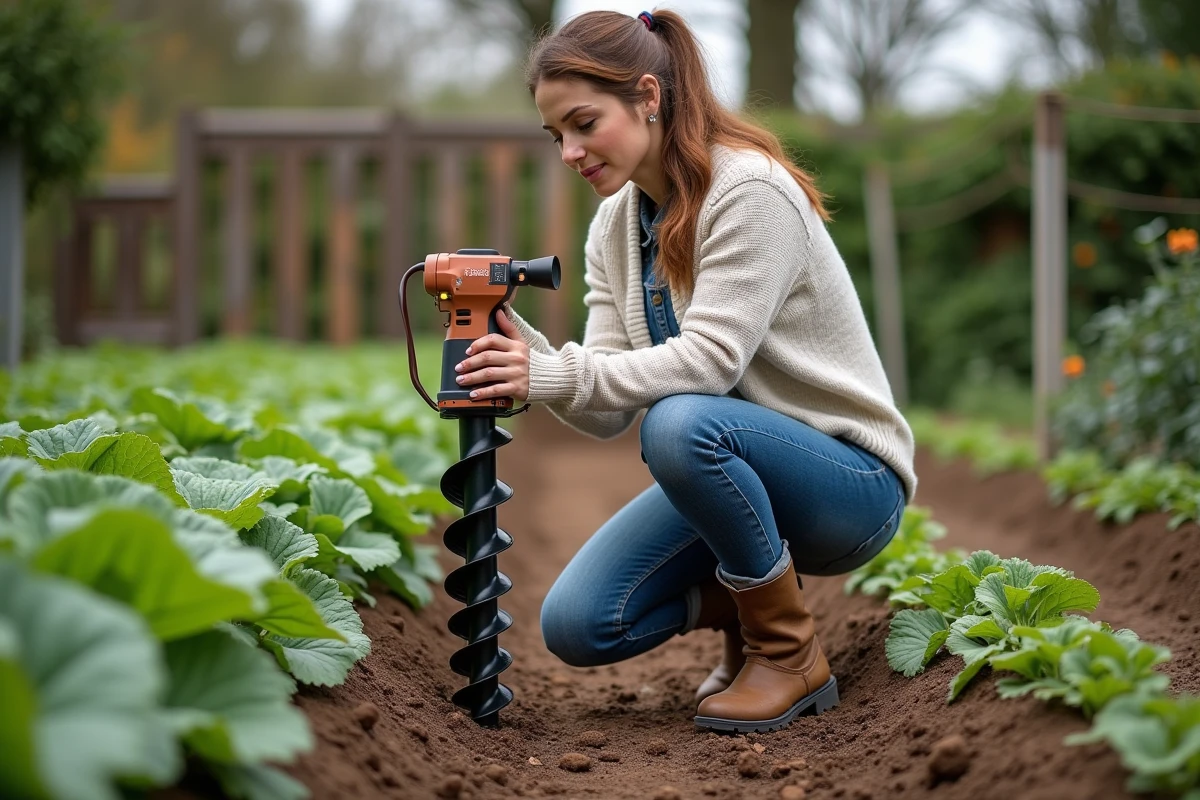
As for the manual auger, it remains reserved for small, occasional projects. Without a motor, it operates solely on arm strength: perfect for a few holes in soft soil, much less suitable when clay or rocks pose a barrier. Its advantage: simplicity and low cost. For heavy professional activities, the hydraulic auger is mainly aimed at field specialists.
The essential criteria for choosing the most suitable gas-powered auger for your work
What makes the difference from one machine to another is primarily the power of the gas engine. The higher the displacement (measured in cm³), the more the auger can tackle hard, clayey, or rocky soils without flinching. For demanding projects, a range of 50 to 80 cm³ ensures success where others fail. The engine torque also matters: high torque means the auger won’t stall, even on difficult terrain.
The bit plays a central role. Its diameter and length determine the size and depth of the holes. Common models offer a range of 7 to 30 cm in diameter, up to 80 cm long. For stakes, a bit of 100 to 150 mm is sufficient; to plant a tree, aim for between 200 and 300 mm. Hard soils require hardened steel bits. For deep drilling, an extension quickly becomes essential.
Here are additional criteria not to overlook to refine your choice:
- Weight: a machine that is too heavy becomes difficult to handle, but if it’s too light, it loses stability. The ideal is a balance between comfort and efficiency.
- Safety: automatic disengagement, a bit brake, anti-vibration handles. These features prevent jams and reduce the risk of accidents or mechanical failure.
- Ergonomics: comfortable handling, easy starting, hassle-free maintenance. The tool should remain pleasant to use, even after several hours of work.
The price varies according to the range, power, and equipment. For intensive use, investing in reliability and safety is always a wise choice. For occasional needs, renting offers a smart alternative.
Choosing the right gas-powered auger ensures effective work without hassle. On stubborn terrain or facing a long series of holes, the right tool makes all the difference and transforms a chore into a mastered task.